
Recently, the Conference of the Parties, called together by the United Nations Framework Convention on Climate Change (UNFCCC), took place in Azerbaijan. This get-together brought together global leaders to negotiate and address critical issues related to climate change. Nevertheless, the recent COP 29 summit in Azerbaijan has faced widespread criticism for its leadership and consequences. Experts have emphasized inadequate climate finance and a failure to meet the summit’s targets as key shortcomings. This criticism underscores a recurring pattern of developed countries failing to support developing nations most impacted by climate change adequately.
While global and local collaboration is essential, Pakistan, like many other developing countries, cannot solely rely on international support for its climate action efforts. The increasing frequency and severity of climate-related issues in Pakistan necessitate a proactive and independent approach.
The country faces numerous challenges, including a large and growing population, limited access to education, economic instability, youth overpopulation, pervasive gender inequality, and high vulnerability to climate change. These issues exacerbate the impacts of climate change, further hindering Pakistan’s ability to respond effectively. Moreover, the lack of governance and weak policy implementation amplify these vulnerabilities.
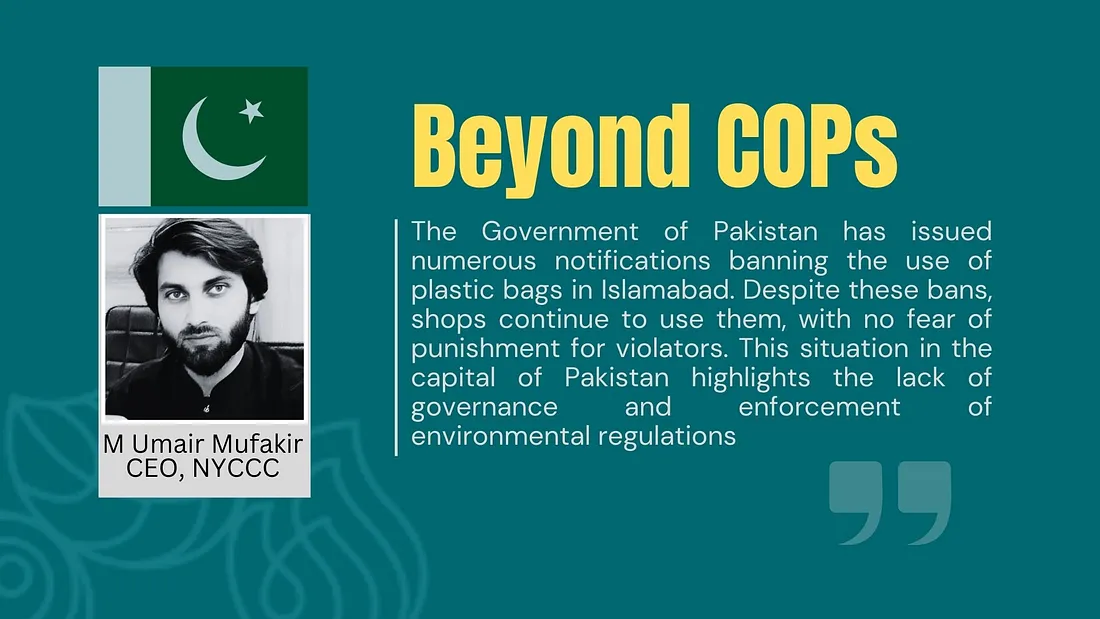
For example, the government of Pakistan has issued numerous notifications banning the use of plastic bags in Islamabad. Despite these bans, many shops continue to use them, with no fear of punishment for violators. This situation in the capital of Pakistan highlights the lack of effective governance and enforcement of environmental regulations.
Pakistan’s first step is to recognize and accept its climate-related challenges. Without acknowledgment and a serious commitment to addressing these issues, the country cannot progress toward effective solutions. Governance remains a critical area requiring improvement to ensure policies are implemented professionally and regularly. Recognizing the problem is pivotal, as it lays the foundation for building robust strategies and actions.
To address climate change effectively, Pakistan must prioritize the creation of climate education programs, the development of a circular economy, the implementation of smart agriculture initiatives, the promotion of nature-based solutions, and the enhancement of skill development opportunities. Transitioning to a green economy through investments in renewable energy sources is vital. Equipping the youth with the necessary skills via vocational training programs will not only foster economic growth but also ensure the country’s readiness to tackle climate-related challenges. By integrating green skills into national development plans, Pakistan can align its workforce with global sustainability trends.
Climate education is another essential area for action. Integrating environmental studies into school curricula can help foster awareness from an early age. Community-based awareness campaigns can further empower individuals to take actionable steps toward environmental preservation. Engaging religious scholars to spread climate awareness spiritually and advocating for their involvement in environmental discourse can also play a transformative role in mobilizing communities across Pakistan, as all sectors of society played a role in the COVID-19 response. A similar approach should be adopted for addressing climate change.
Harnessing the power of technology is crucial for advancing climate solutions. Academic institutions can utilize AI, research, and big data analytics to develop sustainable solutions. These tools can provide valuable insights into climate patterns, resource management, and disaster preparedness, enabling Pakistan to make data-driven decisions for a resilient future.
Finally, societal responsibility is paramount in addressing climate challenges. Individuals must reduce their carbon footprints, participate in community initiatives, and actively engage in advocacy efforts. Collective action at the grassroots level can significantly amplify the impact of national policies and strategies.
Pakistan’s path to climate resilience lies in taking ownership of its climate future. By prioritizing governance, investing in green jobs, promoting climate education, leveraging technology, and fostering societal responsibility, Pakistan can build a sustainable and resilient future for its people. The lessons from COP29’s shortcomings highlight the importance of proactive, independent, and comprehensive approaches to climate action. Only by addressing these challenges head-on can Pakistan ensure a brighter, greener future for future generations.