5 Pakistani Cities Feature Among the World’s Most Climate-Vulnerable by Alphageo
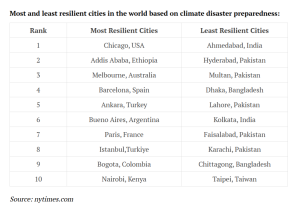
Hyderabad, Multan, Lahore and Faisalabad feature among the seven least climate-resilient cities globally, while Karachi ranks eighth. Ahmedabad, India, ranks last in AlphaGeo’s global climate preparedness index.
A new Climate Risk & Resilience Index by AlphaGeo, analysing 72 cities worldwide, highlights a significant climate-resilience gap across South Asia, with several Pakistani and Indian cities appearing among the most vulnerable.
The index assesses cities based on six major physical climate hazards: inland and coastal flooding, heat stress, drought, wildfires and hurricane winds, while also considering the capacity of cities to adapt through governance, infrastructure, wealth and policy investment.
🇵🇰 Pakistan’s Cities Among the Least Resilient
Five Pakistani cities appear in the bottom nine of the global ranking:
- Hyderabad, Pakistan — 2nd least resilient
- Multan, Pakistan — 3rd
- Lahore, Pakistan — 5th
- Faisalabad, Pakistan — 7th
- Karachi, Pakistan — 8th
Their rankings reflect the growing vulnerability of South Asian urban centres to extreme heat, flooding, heavy rainfall and other climate-related hazards, combined with gaps in adaptation capacity.
World’s Most Climate-Resilient Cities
At the other end of the ranking, Chicago emerged as the world’s most climate-resilient city. Its relatively low exposure to hurricanes, freshwater resources, temperate climate and long-term investments in flood-management infrastructure contributed to its position.
The top 10 most resilient cities are:
- Chicago
- Addis Ababa
- Melbourne
- Barcelona
- Ankara
- Buenos Aires
- Paris
- Istanbul
- Bogotá
- Nairobi
A Warning for South Asian Cities
The findings highlight an urgent need for cities across Pakistan and South Asia to strengthen climate-resilient infrastructure, early-warning systems, heat action plans, disaster preparedness, water management and climate-informed urban planning.
With Pakistan already facing intensifying heatwaves, floods and other climate-related hazards, the ranking underscores the importance of moving from climate risk assessment to practical, locally funded adaptation and resilience action.
Climate resilience is no longer only about surviving disasters—it is about preparing cities before disasters strike.